7 Tips for Choosing SPC Click Floors for Global Buyers?
Selecting the right Spc Click Floors can influence installation speed, indoor comfort, and long-term project costs. Global buyers face different climates, building practices, safety standards, and customer expectations. A floor that performs well in a dry showroom may react differently in a humid coastal warehouse. That difference matters.
This guide introduces seven practical tips for evaluating Spc Click Floors before placing an international order. It considers core density, wear-layer thickness, click-lock precision, surface texture, acoustic performance, packaging, and supplier reliability. Buyers should request physical samples, technical data sheets, test reports, and installation instructions. Do not rely on attractive photographs alone. Small details matter.
Check the locking edges under direct light. Look for clean profiles, consistent dimensions, and stable joints. Review whether the product suits kitchens, retail spaces, offices, or heavy-traffic areas. Confirm the recommended subfloor tolerance before comparing prices. A lower quotation can become expensive after breakage, delays, or rejected batches.
International purchasing also requires careful verification of factory capacity, quality-control procedures, moisture protection, container loading, and after-sales support. Standards and labeling requirements vary by destination, so local professional advice remains valuable. No single specification guarantees success. Even experienced buyers can overlook installation conditions or seasonal changes.
Use these seven tips as a practical screening framework, not a replacement for testing. Compare samples under real lighting and inspect them after repeated handling. Good decisions come from evidence, clear communication, and a willingness to question convenient assumptions.
What Is SPC Click Flooring and Why Does It Suit Global Buyers?
SPC click flooring is a rigid-core floor made from stone powder, PVC, and stabilizing additives. Its dense core resists moisture and keeps boards firm under everyday pressure. Each plank uses a click-lock edge, so installers can join pieces without wet adhesive. The result is a clean floating floor with fewer tools and less site disruption.
This structure suits global buyers because shipping, storage, and installation conditions often vary. In humid coastal areas, the waterproof core helps reduce concerns about surface swelling. In colder regions, its dimensional stability can support more predictable fitting. A buyer should still check subfloor flatness, room temperature, and expansion gaps before installation. Small errors there may create movement or clicking sounds later.
For international projects, compare wear-layer thickness, locking precision, carton strength, and test documentation. A sample can reveal more than a catalogue: inspect the joint, bend the plank carefully, and place it under a chair leg. Ask whether product data covers fire performance, slip resistance, emissions, and local building requirements. SPC is tough, but it is not indestructible. Heavy furniture, sharp grit, or poor installation can still leave damage. Experienced buyers also review spare-plank recommendations, because matching a future batch may be difficult.
How to Compare Core Structure, Wear Layers, and Surface Performance
When comparing SPC click floors, start with the core structure. Check the stone-plastic composite layer, dimensional stability, and click-lock accuracy. A dense core should resist compression under furniture and rolling chairs. However, density alone does not guarantee reliable performance. I once inspected samples that felt rigid but showed weak joints after repeated assembly. Request thickness data, locking-cycle tests, and temperature-change results. Review both metric measurements and test conditions. Global buyers should also confirm installation tolerances for humid, cold, or heated rooms.
The wear layer needs equal attention. Compare its thickness, abrasion resistance, and transparency, not only the printed specification. A thicker layer is not automatically better. Ask how the surface performs after simulated foot traffic, grit exposure, and chair movement. Then examine the coating under angled light. Does it hide fine scratches? Does it maintain texture after cleaning? Low-gloss finishes can reduce reflections, while embossed surfaces may improve visual realism but trap dirt. Surface slip resistance matters in entrances and commercial areas. Request complete test reports from an independent laboratory when possible. Samples can mislead. Real flooring faces sand, moisture, dropped objects, and uneven subfloors. One overlooked weakness can become an expensive complaint. Compare warranties carefully, but treat them as evidence, not proof.
How to Select Designs, Sizes, and Locking Systems for Different Markets
Choosing SPC Click Floors for Global Buyers
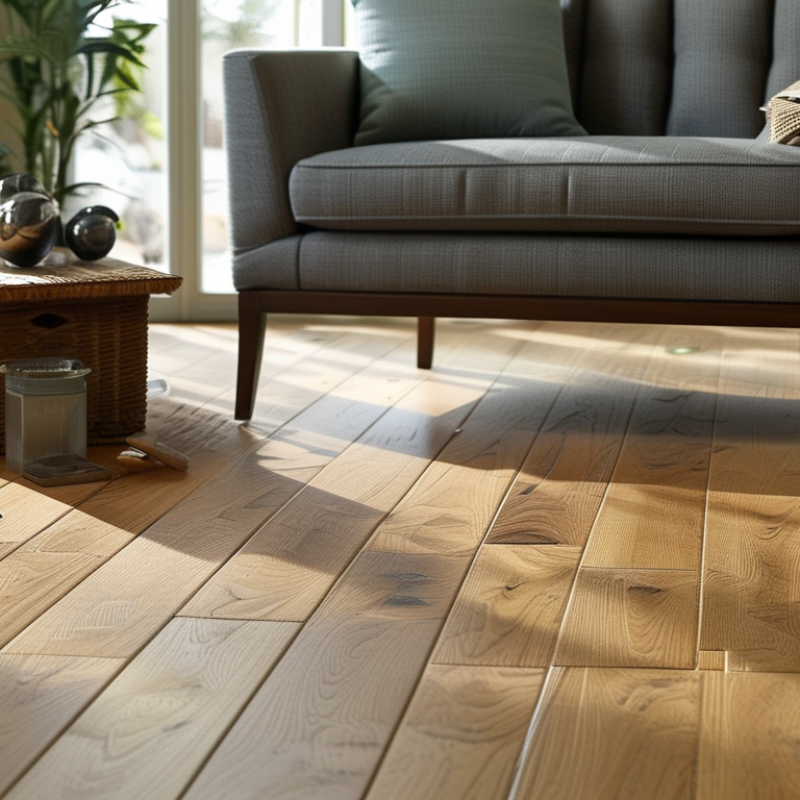
Market preferences should guide the surface design. Warm oak tones often suit residential interiors, while stone visuals can fit offices and retail spaces. Study local lighting, furniture styles, and color trends before selecting a pattern. A printed sample under warehouse lighting may look different at home. Test it in daylight too.
Plank size affects both appearance and installation. Long, wide boards create a calm look in open rooms, but smaller spaces may need shorter formats. Tile-shaped SPC can suit kitchens, entryways, and commercial corridors. Check carton weight and loading limits before approving a size. Large formats are attractive, but they can increase handling difficulty. That detail is easy to overlook.
The locking system must match installer habits and site conditions. Angle-lock systems can support faster work, while drop-lock systems may help in tighter areas. Review joint strength, edge accuracy, and replacement methods with a local installer. Always inspect several cartons, not one perfect sample. Uneven subfloors, temperature changes, and rushed installation can expose weaknesses. Technical sheets should state wear layer, dimensional stability, recommended expansion gaps, and suitable underlay requirements. Confirm these details independently. A cheaper specification may become expensive after rework.
How to Verify Quality Standards, Certifications, and Product Safety
For global buyers, SPC click flooring should be checked through documents, samples, and testing—not attractive packaging alone. Request the technical data sheet, installation instructions, batch number, and recent laboratory reports. Check whether the product meets relevant regional requirements, such as EN 14041 in Europe or applicable ASTM methods in North America. The test laboratory should be independent and accredited to ISO/IEC 17025.
Look beyond logos. Confirm formaldehyde emissions, phthalate restrictions, slip resistance, fire performance, dimensional stability, and wear resistance. A low-emission certificate can support indoor-air claims, but its scope and expiry date matter. ISO 9001 may show process control, yet it does not prove that every floor is safe or durable. Ask for reports matching the exact thickness, wear layer, and click system you plan to purchase.
Inspect a full sample, including the locking edge. Check whether the core bends cleanly, the surface resists scratching, and the joint closes without visible gaps. Keep records. Compare the sample with production batches before shipment. This step is easy to skip, and that is a mistake. A certificate may be genuine but outdated, incomplete, or issued for another product. Ask direct questions, request clarification in writing, and use third-party inspection when the order is large. No process is perfect. Careful verification simply reduces unpleasant surprises.
How to Evaluate Suppliers, Costs, Logistics, and After-Sales Support
Choosing SPC click flooring requires more than comparing catalog prices. Verify the supplier’s factory address, production capacity, quality controls, and export history. Request recent test reports for dimensional stability, wear resistance, slip performance, and emissions. Check whether samples match mass production. They sometimes do not. A pre-shipment inspection can expose uneven locking edges or damaged cartons before payment.
Calculate landed cost, not just the unit price. Include tooling, packaging, inland delivery, ocean freight, insurance, duties, and port handling. UNCTAD’s Review of Maritime Transport reports that over 80% of global merchandise trade by volume moves by sea, so container planning matters. Compare full-container and mixed-load options. Confirm the Incoterm, loading date, carton dimensions, pallet limits, and spare-board percentage. A low factory quote can become expensive after delays and rework.
Use the World Bank’s 2023 Logistics Performance Index as a reference when comparing destination markets. It evaluates customs, infrastructure, shipment arrangements, logistics competence, tracking, and timeliness. Ask suppliers for realistic transit windows, tracking procedures, and backup routes. After-sales support should include written claims rules, photo requirements, response times, and replacement arrangements. Define who pays for defective cartons. Also test communication before signing. Slow replies are a warning. My own evaluation would still include a small trial order, because spreadsheets rarely reveal how a locking system behaves after careless handling.