
We ship across the U.S. and Canada. Visit our showrooms in Atlanta, Tampa and Naples and Nashville!
What Are the Best Steel Front Doors from China?
Choosing the best steel front doors from China takes more than comparing catalog photos or prices. A glossy finish can hide thin sheet steel, weak corner joints, or poor weather seals. Details matter. Buyers should compare steel thickness, corrosion protection, core material, frame construction, hardware, and independently verified test results.
The Steel Door Institute’s ANSI/SDI A250.8 standard provides a useful reference for door construction and performance classifications. U.S. Department of Energy guidance on doors and windows also highlights air leakage and insulation as important factors in building energy performance. Building-science expert Joseph Lstiburek is often quoted as saying, “Air flows from high pressure to low pressure.” That simple rule explains why a well-fitted door, continuous weatherstripping, and careful installation matter as much as the door slab itself.
For Chinese manufacturers, ask for current test reports, not just product brochures. Check whether the stated ratings apply to the complete door assembly, including its frame, glazing, and hardware. Request clear details on coating systems, indoor or outdoor use, packaging, and warranty coverage. Compare samples in person when possible; inspect edges, welds, finish consistency, and how firmly the lock engages. A low quotation may be attractive. It is not proof of value. This guide examines the features and evidence that help identify dependable steel front doors, while noting where available product claims still deserve closer scrutiny.
What Makes Steel Front Doors from China Stand Out?
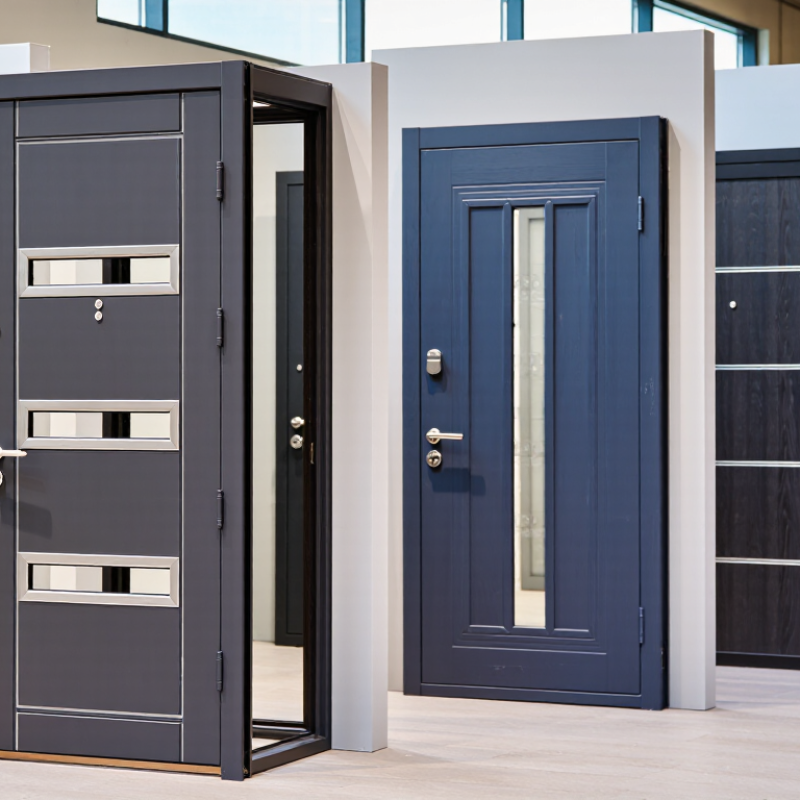
Steel front doors from China stand out through their balance of structure, finish, and production flexibility. Many factories work with galvanized steel, reinforced cores, and multi-point locking systems. These materials can resist daily impact, moisture, and temperature changes when properly engineered. A well-made door should feel rigid, not hollow, when it closes.
Customization is another strong advantage. Buyers can request narrow glass panels, wood-grain coatings, thermal breaks, or unusual dimensions. Powder-coated surfaces often create a smooth finish with consistent color. In practical inspections, I look closely at hinge alignment, weld quality, weather seals, and frame thickness. Small gaps around the frame can cause drafts and water entry. Details matter.
Factory testing also separates reliable suppliers from ordinary ones. Ask for documented checks on coating adhesion, air leakage, water resistance, and hardware cycles. Independent reports are more convincing than attractive catalog images. Still, no supplier is perfect. A beautiful finish may hide weak insulation, and a heavy door may operate poorly if the hinges are undersized. Local climate and installation quality also affect performance. Before ordering, verify measurements, packaging protection, replacement parts, and applicable building requirements. A sample inspection can prevent expensive surprises.
| Evaluation dimension | What to look for | Why it matters | Practical verification |
|---|---|---|---|
| Steel skin and corrosion protection | Ask for the steel type, sheet thickness, galvanizing or other corrosion-protection details, and coating system. Steel thickness and finish can vary by model. | The steel skin and protective finish affect dent resistance, weathering, and how well the door resists rust, especially at edges and cutouts. | Review a written specification, coating details, and finish samples. Check that exposed edges and hardware openings receive suitable protection. |
| Core and thermal performance | Many insulated steel doors use a foam core, such as polyurethane or polystyrene. Request whole-door U-factor or equivalent thermal-performance data for the exact configuration. | The core, frame, glazing, and perimeter seals all contribute to heat transfer; the steel face alone does not determine insulation performance. | Request test or certification documents that identify the door size, frame, glazing, and hardware configuration. Do not compare core material alone. |
| Weather sealing and water management | Look for continuous perimeter weatherstripping, a suitable threshold, a compatible sill, and clear guidance for flashing and installation. | A well-made door can still leak air or water if its seals, threshold, installation details, or surrounding wall assembly are unsuitable. | For projects with performance requirements, request reports for the complete door assembly, such as air-leakage testing under ASTM E283 or water-penetration testing under ASTM E331, where applicable. |
| Frame, hinges, and locking preparation | Confirm frame material and reinforcement, hinge and lock locations, handing, backset, and compatibility with the intended hardware. | Correct reinforcement and accurate preparation support smooth operation and help the door fit the project’s security and installation requirements. | Check dimensioned drawings and hardware schedules before production. Confirm whether hardware is included or supplied separately. |
| Finish and design options | Available options may include painted finishes, wood-grain effects, panel profiles, glazing, and custom sizes, subject to the product range. | A broad range of configurations can help match architectural styles, but added glazing or custom details may change cost and performance. | Approve a production sample or finish sample and verify that any glazing is suitable for the application and local code requirements. |
| Testing and compliance | Choose products with documentation relevant to the destination market and project, rather than relying on general claims about quality or compliance. | Building codes and performance requirements differ by location. A test report for one model or size may not apply to another configuration. | Check report scope, test laboratory, date, model, size, and configuration. Fire-rated doors require the applicable listing and labeled assembly. |
| Quality control and consistency | Review documented inspection steps for dimensions, welding or joining, coating, assembly, and final operation. | Consistent production helps reduce fit, finish, and operation issues across an order. | Request inspection records, tolerances, and pre-shipment photos or inspection arrangements for the agreed order specification. |
| Packaging, delivery, and support | Confirm protective packaging, shipment terms, spare-part availability, warranty coverage, and procedures for reporting transit damage. | Long-distance shipping and installation can affect the final result; clear documentation and support are part of a practical purchasing decision. | Agree on packaging, delivery responsibility, warranty terms, and a written process for claims before placing the order. |
| The best choice depends on the project’s climate, code requirements, dimensions, finish, and installation conditions. Confirm specifications and test documentation for the exact door assembly before purchase. | |||
Related Posts
-
What are the Benefits of Steel Entry Doors with Glass?
-
Top 5 Benefits of Choosing Steel Front Doors for Your Home Security and Curb Appeal
-
10 Essential Tips for Choosing Steel Front Doors
-
Exploring the Benefits of Iron Doors for Home Security and Aesthetic Appeal
-
2025 How to Choose the Perfect Iron Entry Doors for Your Home Upgrade
-
What is modern iron doors and why choose them for your home?