
We ship across the U.S. and Canada. Visit our showrooms in Atlanta, Tampa and Naples and Nashville!
Choosing the best Maple Engineered Flooring from China requires more than comparing photographs and export prices. Buyers should examine construction, moisture control, surface finishing, factory consistency, and long-term supplier support. A beautiful sample can still fail if its core contains uneven layers or excessive moisture.
Brett Miller, Vice President of Technical Standards, Training, and Certification at the National Wood Flooring Association, has emphasized that “wood flooring is a natural product, and no two floors are the same.” That principle matters when evaluating Chinese maple flooring. Natural maple may show creamy tones, subtle grain, mineral streaks, and occasional color variation. These details are not necessarily defects. They are evidence of real wood.
The strongest products usually combine carefully selected maple wear layers with stable plywood or multi-layer cores. Ask for measurable specifications. Check wear-layer thickness, board dimensions, moisture readings, finish type, formaldehyde documentation, and installation guidance. Factory visits, independent inspections, and batch samples can reveal more than polished marketing images.
Look closely.
A reliable manufacturer should explain how timber is dried, how boards are graded, and how tongue-and-groove tolerances are controlled. Certifications can support trust, but they should be verified rather than accepted blindly. I would also test several cartons, because one perfect box proves little. China offers capable flooring producers, yet quality varies widely between factories. The best Maple Engineered Flooring is therefore not simply the cheapest or brightest option. It is the product that performs consistently, matches the project environment, and comes from a supplier willing to document its claims. Mistakes remain possible, especially when climate, subfloor conditions, and installation skills are overlooked.
What Defines High-Quality Maple Engineered Flooring from China?
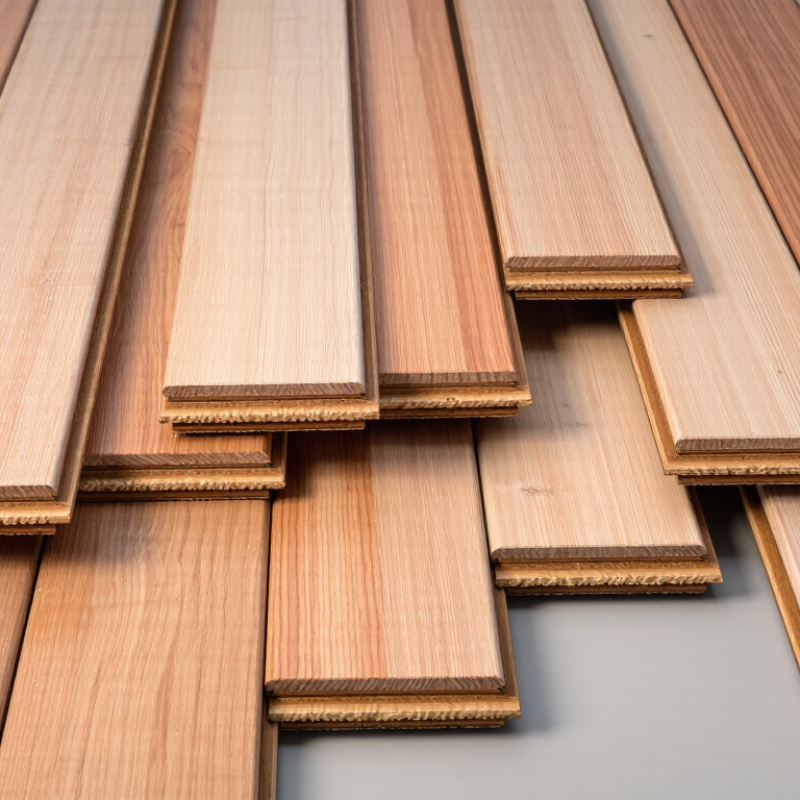
High-quality maple engineered flooring begins with stable construction, not attractive color alone. A reliable board usually has a carefully dried maple wear layer over balanced plywood or multi-layer timber. Each layer should run in a controlled direction. This reduces cupping when indoor humidity changes. The top layer should have consistent thickness, often around three to four millimeters for residential use. Check it at several points, not just one.
During flooring inspections, I examine the tongue-and-groove fit, surface sanding, and board straightness. Tight joints should close without force. The finish should feel smooth but not slippery. Small mineral marks can show natural maple character. Large open defects, loose knots, or uneven coating need closer review. A factory should provide moisture readings, formaldehyde test results, and production quality records. Independent testing is more convincing than attractive product photographs.
China has many capable flooring manufacturers, but quality can vary between production lines. Ask for samples from actual production batches. Compare color, thickness, edge accuracy, and finish under daylight. Packaging matters too. Damp cartons can damage otherwise good flooring during transport. I have seen excellent samples followed by weaker bulk goods, so inspection should continue before shipment. No board is perfect. Even experienced buyers can overlook seasonal movement or installation conditions. Acclimation, a dry subfloor, and controlled indoor humidity remain essential. Good material cannot correct poor installation.
How Is Maple Engineered Flooring Manufactured in China?
Chinese maple engineered flooring usually begins with carefully graded maple veneers. Manufacturers inspect color, grain direction, knots, and moisture content. The FAO Forestry Production and Trade database reports China produced about 300 million cubic meters of wood-based panels in 2023. This industrial scale supports advanced drying, pressing, and cutting equipment.
The maple surface layer is commonly sliced into thin veneers. Workers then kiln-dry the veneers, often targeting 6% to 9% moisture content. A multilayer core follows. Cross-laid plywood or stable wood lamellas reduce seasonal movement. Adhesive is spread evenly before hot pressing bonds the structure under controlled temperature and pressure. Some factories use automated scanners to detect cracks and uneven grain.
Then comes sanding.
The board is calibrated, profiled, and finished with several protective coats. Quality teams test dimensional stability, surface bonding, moisture, and formaldehyde emissions. EN 14342 provides relevant performance requirements for wood flooring sold in European markets. However, certification alone does not prove every batch is consistent. Factory audits should compare production records with laboratory results.
A practical weakness remains. Maple is attractive, but its pale surface can expose sanding marks quickly. Poorly balanced drying may cause cupping after installation. China's large production capacity helps control costs, yet it can also encourage rushed inspections. Buyers should request recent test reports, veneer thickness, adhesive information, and batch-specific moisture data before approval.
Typical moisture-content targets during the manufacture of maple engineered flooring
Maple flooring is commonly kiln-dried and conditioned to approximately 6–9% moisture content before profiling and finishing. Stable moisture levels help reduce cupping, gaps, and dimensional movement after installation. Actual targets may vary according to regional climate, board thickness, and production specifications.
When choosing maple engineered flooring from China, identify the species before comparing prices. Hard maple, usually Acer saccharum, offers a pale cream color and tight, subtle grain. Soft maple, including Acer rubrum, often shows warmer tones and slightly more visible movement. Species names can vary between suppliers, so request botanical names and origin records.
Grades create the strongest visual difference. Select grade has fewer knots and a cleaner, calmer surface. Natural grade includes small knots and gentle color variation. Rustic grade shows larger knots, mineral streaks, and stronger character. No universal grading system applies across every factory. Ask for a physical sample, not only a digital photograph.
Finishes range from matte UV lacquer to natural oil, brushed textures, and light smoked effects. Matte lacquer is easier for busy hallways, while oil can feel warmer under bare feet. Brushing may highlight grain but can collect dust in deep grooves. Check the wear layer, core structure, moisture content, and formaldehyde test reports. A sample should sit in the installation room for several days. Inspect it beside a window, because showroom lighting can hide yellow tones and uneven coating. One weakness in many comparisons is the focus on appearance alone. Tongue fit, panel balance, and repair options matter just as much.
When evaluating maple engineered flooring from China, begin with construction, not appearance. Maple’s pale grain can hide weak core materials. Check the wear layer, measured in millimeters, and inspect cross-sections for balanced plywood or stable multi-layer boards. A thicker maple layer supports refinishing. It does not guarantee long service. Ask for test data on abrasion, bonding strength, and dimensional change. Request samples from current production, because a showroom board may not represent the shipped batch. Inspect the edges.
Durability depends on use and installation. In a busy hallway, a 3–4 mm maple wear layer offers more repair potential than a thin veneer. However, hard finishes can scratch under grit, chair wheels, or pet claws. Stability matters when rooms shift from dry heating to humid summers. Compare moisture content, swelling, and delamination results. Store cartons indoors, then acclimate them according to measured site conditions. Keep indoor humidity near 40–60 percent when possible. I would not accept “waterproof” as a technical conclusion. Engineered wood resists movement; it is not immune to moisture.
Environmental review needs documents, not marketing language. Check formaldehyde emissions, adhesive composition, responsible wood sourcing, and factory air or wastewater controls. Look for current laboratory reports, chain-of-custody records, and standards recognized in the destination market. Verify that certificate numbers match the factory and product specification. One uncomfortable point remains: paperwork can be complete while quality varies between batches. Independent pre-shipment inspection reduces that risk, but it cannot replace installation supervision. Ask for replacement-board procedures and warranty terms in writing. I would also cut one sample open. The core tells the truth.
| Evaluation Dimension | Recommended Benchmark | How to Verify | Why It Matters for Maple Flooring | Assessment |
|---|---|---|---|---|
| Wear Layer | Approximately 2.5–4.0 mm of genuine maple wear layer for normal residential use; 3.5–4.0 mm or more for heavier traffic and possible refinishing. | Check the construction specification, cross-section photographs, and independent thickness measurement from a production sample. | A thicker maple layer provides greater service life and more potential for professional sanding and refinishing. | High priority |
| Total Board Thickness | Common engineered formats are approximately 12–20 mm thick. The selected thickness must match the subfloor, transitions, and installation system. | Measure finished board thickness at several points and compare it with the declared tolerance. | Thickness affects floor height, joint strength, acoustic performance, and compatibility with doors and adjoining floors. | Essential check |
| Core Construction | Multi-layer plywood or a balanced cross-laminated wood structure, with grain directions arranged to reduce movement. | Inspect a cut section for consistent layers, sound bonding, void-free construction, and uniform adhesive coverage. | Maple is a dense hardwood; a well-balanced core helps limit cupping, bowing, and joint stress caused by humidity changes. | High priority |
| Dimensional Stability | Require documented performance after humidity cycling, with no unacceptable delamination, open joints, buckling, or permanent distortion. | Review laboratory test reports using a recognized flooring or wood-panel test method and confirm the tested construction matches the supplied product. | Engineered flooring is generally more stable than solid wood, but installation moisture and poor core bonding can still cause failure. | Pass / fail |
| Moisture Content | Wood components should normally be conditioned close to the expected service environment; many flooring programs target roughly 6–9% at shipment, subject to climate and specification. | Use a calibrated moisture meter and sample multiple boards from different cartons. Compare results with the product specification. | Incorrect moisture content increases the risk of shrinkage, swelling, gapping, and installation problems after delivery. | High priority |
| Hardness and Dent Resistance | Hard maple is commonly reported at about 1,450 lbf on the Janka hardness scale, although the result depends on species, grading, moisture, and test method. | Confirm the declared maple species and review a laboratory hardness report or technical data sheet. | Hardness supports resistance to everyday indentation, but it does not replace a durable finish or correct installation. | Strong benefit |
| Surface Finish | Factory-applied UV-cured polyurethane, acrylic, or oil-based finish with consistent coverage and abrasion performance appropriate to the intended use. | Review the finish system, sheen consistency, abrasion or wear test results, edge coverage, and repair instructions. | Most visible wear occurs in the finish layer rather than in the maple itself; finish quality strongly affects maintenance requirements. | High priority |
| Formaldehyde Emissions | For wood-based panels, request compliance with the applicable destination-market limit, such as CARB Phase 2 or TSCA Title VI in the United States, or an applicable European emission classification. | Obtain a current third-party report identifying the product, production site, test method, and report date. Do not rely only on an unverified declaration. | Adhesives used in the core can affect indoor air quality. Emission performance must be assessed on the finished construction. | Mandatory |
| VOC and Indoor Air Quality | Prefer low-emitting coatings and adhesives supported by recognized indoor-air-quality testing for the intended market. | Request chamber-test data, coating safety documentation, and a complete list of regulated substances where available. | Low formaldehyde alone does not describe every possible emission from finishes, stains, primers, or adhesives. | Recommended |
| Timber Legality and Traceability | Documented legal sourcing, species identification, supplier traceability, and chain-of-custody evidence where certification is required. | Check invoices, species records, legality documents, certification numbers, and the consistency of documents across shipments. | Maple species and origin should be clear; traceability reduces the risk of substitution and supports responsible procurement. | Mandatory for responsible sourcing |
| Adhesive Bond Integrity | Continuous, well-cured bonding between the maple wear layer and the core, without visible gaps, bubbling, or weak edges. | Inspect cross-sections, perform delamination or bond-strength testing where appropriate, and review factory process controls. | Adhesive failure can cause hollow spots, face checking, delamination, and irreversible floor movement. | Pass / fail |
| Machining and Joint Precision | Consistent tongue-and-groove or click geometry, square ends, stable board width, and tight visual tolerances. | Measure sample boards from several cartons and conduct a dry-fit inspection before installation. | Accurate machining reduces gaps, uneven transitions, installation waste, and stress at the locking or glued joints. | High priority |
| Grading and Appearance | Define clear limits for knots, mineral streaks, color variation, sapwood, filled defects, edge defects, and face checking. | Approve a signed reference panel and inspect production against the agreed grading standard under consistent lighting. | Maple naturally varies in color and grain; a precise grade avoids disputes while preserving the material’s natural appearance. | Specify clearly |
| Installation Compatibility | Documented suitability for floating, glue-down, or nail-down installation, with subfloor flatness, moisture, and expansion requirements. | Review the installation manual and confirm compliance with the adhesive, underlayment, subfloor, and climate requirements. | Even a well-made floor can fail when installed over a damp or uneven subfloor or without the required expansion gaps. | Mandatory |
| Quality-Control Documentation | Batch traceability, inspection records, product tolerances, packaging controls, and corrective-action procedures. | Request inspection plans, sample reports, carton labels, and records that connect finished goods to production batches. | Consistent documentation is a practical indicator that technical claims can be verified and repeated across shipments. | Recommended |
Practical conclusion: The best maple engineered flooring should be selected by verified construction quality, moisture control, dimensional-stability testing, durable finishing, and destination-market environmental compliance—not by appearance or price alone.
What Is the Best Maple Engineered Flooring From China?
Buyers should inspect the supplier before judging the maple surface. Request factory photos, production records, and a recent third-party audit. Check whether the company controls drying, lamination, sanding, and coating in-house. These steps reduce variation between the approved sample and the shipped floor.
Ask for test reports covering formaldehyde, dimensional stability, surface wear, and bonding strength. The U.S. EPA’s TSCA Title VI standard limits hardwood plywood formaldehyde emissions to 0.05 ppm. A credible supplier should provide reports from an accredited laboratory, not only an internal certificate. Confirm the report number, test date, product construction, and laboratory accreditation. Small details matter.
Wood traceability also deserves attention. FSC’s Facts & Figures 2023 report recorded more than 160 million hectares of certified forest worldwide. Certification does not automatically prove every shipment’s origin. Match the certificate scope with the factory, species, and purchase documents.
Maple grading should be checked physically. Look for closed joints, consistent color, stable tongue-and-groove profiles, and a balanced core. Ask how moisture is measured before packing. A target range around 6% to 9% may suit many indoor projects, but local climate changes the requirement.
I would request samples from different batches. One beautiful board proves very little.
A supplier may have excellent machinery, yet weak complaint handling. Test that process too. Ask for a written replacement policy, inspection photos, and carton labels before placing a large order.